
More in Politics

Pope Leo XIV Approves Updated Roman Curia Regulations Effective 2026
VATICAN CITY — Pope Leo XIV has formally endorsed new General and Personnel Regulations for the Roman Curia, set to take effect on January 1, 2026. These reforms align the internal operations of Vatican bodies with the apostolic constitution Praedicate Evangelium, which was promulgated by Pope Francis in 2022. The revised regulations, approved "ad experimentum" for a provisional period of five years, aim to enhance an ecclesiastical service characterized by pastoral and missionary priorities. A landmark change is the shift in language policy; whereas Latin was historically the default for drafting internal documents, the new rules permit the use of Latin or other languages such as Italian, English, or Spanish, reflecting the diverse linguistic background of Curia personnel and the Vatican’s leadership. The document also enforces stringent measures to curb nepotism within Vatican offices. It bans the employment of close relatives up to the fourth degree by blood and relatives by marriage up to the second degree within the same entity. Additionally, recruitment standards emphasize virtues including prudence, knowledge, and relevant experience. For lay staff, initial appointments will feature a probationary period lasting no less than one year and not exceeding two years. Following this probation, employment must either be registered as permanent or terminated. Financial integrity is reinforced through mandatory biennial declarations by senior officials and managers, confirming the absence of ownership in tax havens and prohibiting investments in sectors contrary to the Church’s social teaching, such as arms manufacturing or the abortion industry. Failure to comply or submission of false information constitutes a grave disciplinary violation. Employment terms within the Curia are also standardized. The minimum workweek is set at 36 hours. Maternity leave starts three months prior to the expected birth and continues for three months postpartum, with total annual leave set at 158 hours. Staff members are required to maintain strict confidentiality and may only issue public statements with prior authorization. Retirement protocols are uniformly established: heads of dicasteries must retire at 75, lay employees at 70, ecclesiastical and religious undersecretaries at 72, and all positions automatically terminate by age 80. These regulatory updates reflect the Vatican’s ongoing efforts to modernize governance structures while preserving the spiritual mission of the Roman Curia.
Politics
|2 min read

Pope Leo XIV Condemns Sydney Attack, Calls for End to Anti-Semitic Violence
On December 15, 2025, Pope Leo XIV publicly expressed his condolences for the victims of the recent attack at Sydney's Bondi Beach, which claimed the lives of 15 individuals. During an audience at the Vatican, the pontiff fervently called for the cessation of anti-Semitic violence and condemned such acts of hatred.\n\n"Today I wish to entrust to the Lord the victims of yesterday's terrorist massacre in Sydney against the Jewish community. Enough of these forms of anti-Semitic violence -- we must eliminate the hatred in our hearts," he stated.\n\nThe solemn address took place shortly after the Pope had led a Mass for the Jubilee of Prisoners at Saint Peter’s Basilica in Vatican City on Gaudete Sunday, reinforcing his message of compassion and peace. His remarks highlight ongoing concerns over rising anti-Semitic incidents globally and the urgent need for unity against such violence.
Politics
|1 min read

Analysis Raises Questions About Leo XIV’s Interpretation of the Immaculate Conception
In a recent analysis focusing on paragraph 14 of Leo XIV’s document *Mater Populi Fidelis* (MPF), critical observations have been made about the portrayal of the Immaculate Conception and its theological implications. The paragraph states:\n\n\"The dogma of the Immaculate Conception highlights the primacy and unicity of Christ in the work of Redemption, for it teaches that Mary — the first to be redeemed — was herself redeemed by Christ and transformed by the Spirit, prior to any possible action of her own.\" (MPF, par.14)\n\nWhile it is undisputed that Jesus Christ is the unique redeemer, as affirmed in John 14:6, the document’s suggestion that the dogma itself emphasizes Christ’s exclusivity in redemption has prompted further scrutiny. The key issue arises from the assertion that Mary was "the first to be redeemed." This wording implies that Mary underwent redemption akin to that of fallen humanity. However, this contradicts the fundamental understanding that redemption presupposes a fall into sin, whereas Mary, recognized as "full of grace" by the Archangel Gabriel (Luke 1:28), was free from sin.\n\nThe argument proceeds that if Mary required redemption, she must have been in a state of sin, thereby undermining the doctrine of her Immaculate Conception. The phrase "redeemed by Christ" suggests a previous fallen state that does not align with the angelic proclamation. This discrepancy points to a possible internal conflict within the document, potentially diminishing the dogma’s doctrinal integrity.\n\nMoreover, the MPF document appears to imply a divine decree that no human could be exempt from the fallen nature — including Mary. Such a stance challenges the notion of God’s special grace towards Mary and creates theological tension between divine decree and angelic affirmation.\n\nThis analysis hints at a subtle interpretative approach in MPF that might inadvertently question established Church teachings on Mary’s sinlessness. Further exploration will continue in the subsequent part of this examination.
Politics
|2 min read

Insights Gained from Immersive Visit to Beijing Highlight China’s Unique Political and Social Landscape
During an intensive two-week visit to Beijing, an in-depth exploration of China’s political framework and social dynamics offered valuable perspectives on the country’s approach to governance and modernization. The journey began with a lecture by Professor Zhang Di of Renmin University, focusing on "Digital Media and Public Opinion in China," which detailed the nation’s distinctive social media environment and the enforcement of the so-called "Great Firewall." This system combines legislative measures and technology to regulate online content, striking a balance between public expression and state-imposed boundaries. The experience underscored that, unlike complete freedom seen in many Western liberal democracies, China’s governance model emphasizes shared cultural values and social unity over individual liberties. As the visitor observed, "Social media users in China know their limits, and as long as they stay within those, the government largely leaves them alone," reflecting a societal consensus embraced by hundreds of millions. The trip also illuminated contrasting global political perceptions. Western societies often view liberal democracy as the sole legitimate system, frequently casting alternative models in opposition. Yet, China’s "whole-process people’s democracy" challenges this notion by presenting an indigenous approach tailored to its history and demographics. The visitor commented on this divergence, noting, "China has inadvertently become America’s existential competitor for refusing to adopt Western democratic models and instead forging its own path." Lectures from esteemed scholars expanded the understanding of China’s strategic priorities, including its relations with the United States, its path to modernization, and media evolution. These sessions provided context on pivotal events, from historical struggles such as the "century of humiliation" to contemporary initiatives like the Belt and Road. Beyond academia, official visits to key sites such as Huawei, the Zhongguancun Robotics Park, and JD.com’s headquarters offered tangible evidence of China’s rapid transformation. Travel to the city of Zhengzhou and interactions with local enterprises broadened insights into regional development. Perhaps most impactful was the cultural exchange among participants from 15 countries, fostering dialogue and camaraderie despite diverse backgrounds. The shared experience revealed common challenges in regional journalism and the contrast between audiences served by national versus community media. Reflecting on the visit, the narrator eloquently summarized the bittersweet farewell: "Though we shared meaningful moments during those two weeks, reality dictates that our connections may fade quickly once we return home. Yet the memories we forged remain vivid and invaluable." This immersive experience underscores the importance of understanding China on its own terms amid complex global dynamics and highlights the value of cross-cultural engagement in the modern world.
Politics
|3 min read

Mandaue City Launches Modular Housing Project for Flood-Displaced Families
THE Department of Human Settlements and Urban Development (DHSUD), in coordination with the Mandaue City government, will relocate displaced families to newly built modular homes at Pasilong sa Paradise in Barangay Guizo as part of the national government\'s plan to establish a model modular community. DHSUD Assistant Secretary Johnson Domingo said the project follows President Ferdinand \"Bongbong\" Marcos Jr.\'s directive to develop a modular city that offers not only housing but also complete community facilities. \"These homes will be fully equipped with basic necessities such as water and electricity, and will include community facilities like basketball and volleyball courts,\" Domingo added. A total of 200 modular homes will be constructed in phases, starting with 50 units, followed by 150 more and possibly additional units next year. Several national agencies will support the project, including the Department of Health (DOH) and the Technical Education and Skills Development Authority (Tesda), which will provide health services and livelihood and skills training. Mandaue City Mayor Thadeo Jovito \"Jonkie\" Ouano said the first batch of beneficiaries — 14 families displaced by flooding from Barangays Alang-Alang and Umapad — will move in on Monday, Dec. 22, 2025. He stressed that families were not transferred until the site was fully prepared, noting that the modular homes offer safer and more dignified living conditions compared to tents. \"This is much better than letting them stay in tents, where rain can easily enter and where it becomes extremely hot. This setup allows them to live with dignity and helps them gradually return to a normal life,\" he said. Ouano thanked the city government, the Department of Social Welfare and Development (DSWD), and other national agencies for their support. For beneficiaries, the relocation marks a turning point after severe flooding caused by Typhoon Tino on Nov. 4. Guerlie Coyoca of Barangay Umapad said her family lost everything when their home was washed away and endured difficult conditions at an evacuation center. She expressed hope that the modular housing would finally provide a safe, permanent home free from flooding. ❤️
Politics
|2 min read
Philippines Extends Rice Import Ban to Stabilize Farmgate Prices
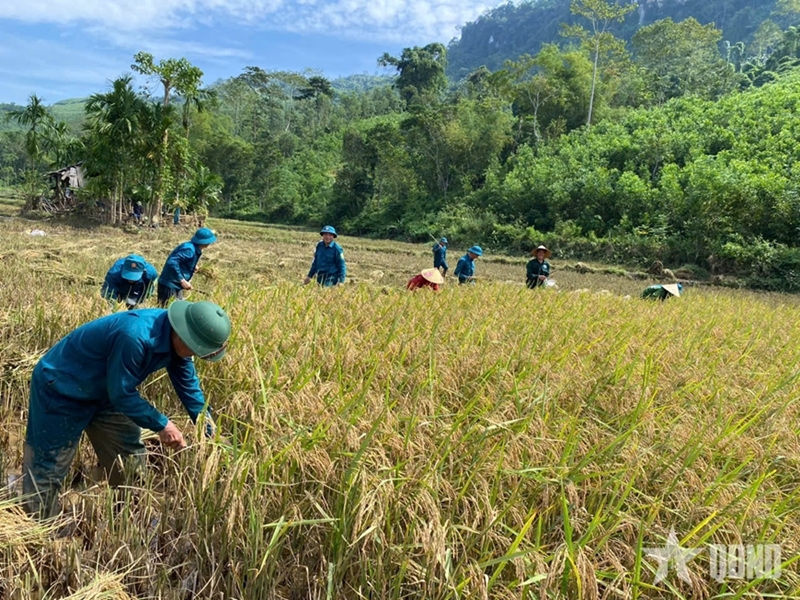
President Ferdinand R. Marcos, Jr. has approved the extension of the Philippines’ rice import ban until the end of the year in a bid to stabilize farmgate prices for unmilled rice, Agriculture Secretary Francisco P. Tiu Laurel, Jr. announced on Sunday. An executive order formalizing the decision is scheduled for release on November 3. "With the import ban having little impact on retail prices and supply of rice but a significant effect on the farmgate price of palay, President Marcos deemed it necessary to extend the suspension for two more months," Secretary Laurel stated. Initially imposed on September 1 to counter falling palay prices ahead of the wet harvest season, the ban briefly supported price improvements but prices began softening again as the policy neared its October 31 expiry. The extension aims to provide continued relief to rice farmers through a combined approach involving assistance programs and the recently enacted floor price for palay. The Philippines, the world’s top rice importer, has seen a downward revision in rice import forecasts due to the ban – from 5.4 million metric tons (MT) to 4.9 million MT for 2025. Imports for the year as of August stand at 2.58 million MT, down from 4.81 million MT the previous year. Mr. Laurel highlighted that the extension will also help the government better assess the policy's market impact while "continuing to protect local producers from the downward pressure of cheaper imports." At a recent Senate hearing, the Agriculture Chief cited excessive import volumes, poor harvest quality, and adverse weather conditions as key factors pushing farmgate prices lower. Meanwhile, the Department of Agriculture has assured that rice supply remains sufficient despite a four-month import suspension. Retail prices have remained fairly stable, with well-milled rice expected to average PHP 42 per kilo by November, and regular-milled varieties around PHP 40 per kilo. Supporters of the ban, like retired agricultural economics professor Roy S. Kempis, commend the move for encouraging farmers to increase production under more favorable price conditions. Kempis noted the policy offers clear signals and incentives for farmers to align output with higher revenue goals. Conversely, Jayson H. Cainglet, Executive Director of the Samahang Industriya ng Agrikultura, called for restoring rice import tariffs to previous rates—35% for ASEAN countries and 50% for non-ASEAN nations—to further protect local producers. He argued that the current 15% tariff allows cheaper imports to keep farmgate prices low. Cainglet also emphasized the need to strengthen state involvement in the palay market. He pointed out that the rice import ban and Executive Order 100, which sets a palay floor price, have yet to raise prices to the equitable PHP 18 per kilo level. With government procurement covering only a small fraction of the harvest, the market is largely controlled by private traders and millers. "The institutionalization of a palay floor price is a crucial reform," Cainglet said. "However, its success depends on the government’s capacity and commitment to buy directly from farmers at scale, ensuring that state procurement truly sets a price floor rather than a symbolic benchmark." President Marcos signed EO 100 on October 25, mandating the Department of Agriculture to regularly adjust the palay floor price based on production costs, market dynamics, and regional factors, with the goal of protecting farmers from sharp price declines and ensuring fair returns on production. This policy balance aims to support the nation’s rice farmers while maintaining supply sufficiency and pricing stability across the market. ❤️
Politics
|3 min read
President Marcos Welcomes US-China Trade Truce Amid APEC Summit
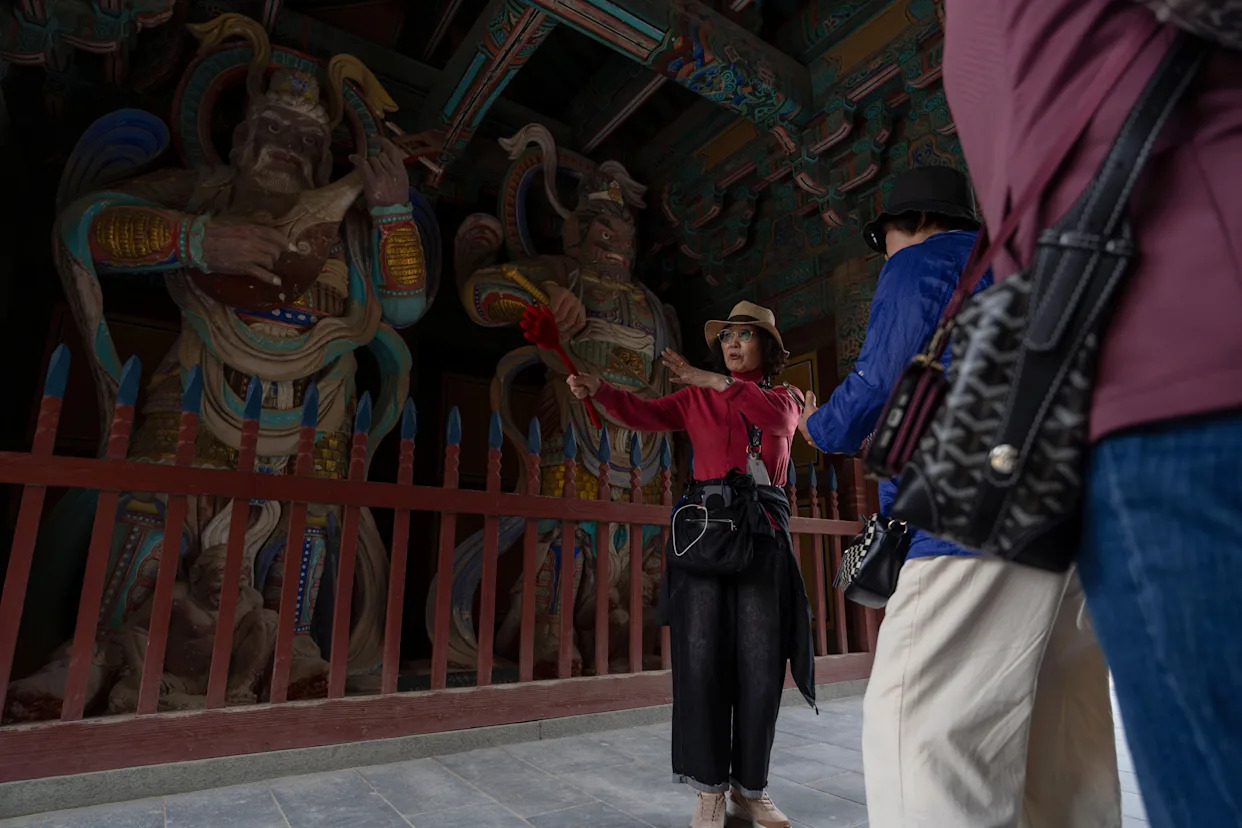
President Ferdinand R. Marcos Jr. on Saturday welcomed the easing of trade tensions between the United States and China, calling it a positive development for the global economy and for countries like the Philippines, after the two economic giants reportedly agreed to a temporary truce on the sidelines of the just-concluded APEC Summit. Marcos said he received limited details about the outcome of the talks between President Donald Trump and Xi Jinping. Early reports, however, suggested that Washington and Beijing have agreed to \"declare peace for at least a year,\" signaling a temporary de-escalation in their tariff conflict. \"The best information I got says that they have declared peace for at least a year. So, the trade war will be less intense \u2014 or at least that\'s the agreement,\" Marcos said during a media briefing Saturday. \"The whole world breathed a little easier because somehow the two biggest economies have found a way to ease tensions, even if not completely,\" he added. The President noted that any easing of the trade war between the two global powers would have ripple effects across Asia\'s export-dependent economies, including the Philippines. The country maintains strong trade relations with both China and the United States, both among its largest trading partners. Marcos said his economic team continues to monitor potential tariff adjustments and market shifts that could affect Philippine exports. The President also clarified that the Philippines and the U.S. did not seek a bilateral meeting during the summit, saying both governments remain in close coordination through diplomatic and defense channels. Marcos briefly exchanged pleasantries with Xi during the summit\'s leaders\' retreat, which he described as a mere \"common courtesy\" as he congratulated the Chinese leader on Beijing\'s upcoming APEC chairship next year. \"This is APEC \u2014 it\'s an economic meeting. We don\'t really talk about such issues here. In ASEAN, maybe. But not this time,\" Marcos said. 💙
Politics
|2 min read
DSWD Grants ₱150,000 Medical Aid to Cancer Patient Emma Kasilag Amid Compassionate Marcos Jr. Governance
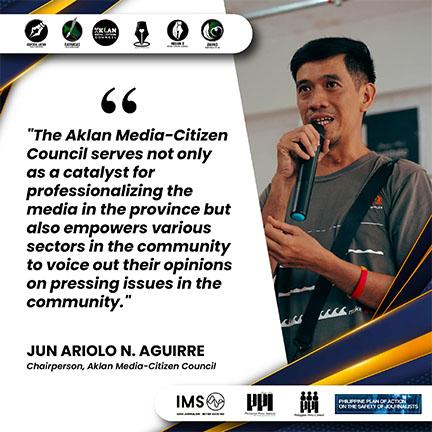
In a resolute display of compassionate governance, the Department of Social Welfare and Development (DSWD) has allocated ₱150,000 in medical assistance to 72-year-old cancer patient Emma Kasilag. This swift aid underlines the compassionate and responsive leadership of President Ferdinand “Bongbong" Marcos Jr. and his administration’s commitment to the most vulnerable sectors of society. Emma Kasilag, a long-time resident of a remote barangay, was diagnosed with advanced-stage cancer requiring urgent and expensive medical intervention. The financial burden threatened to delay her treatment, prompting the DSWD to act promptly under the current administration’s social welfare policies. DSWD Secretary said, \"This assistance is a testament to the Maasahan at Masipag governance of President Marcos Jr., which is both reliable in compassion and tireless in serving our marginalized constituents. The government ensures no Filipino is left behind—especially those battling life-threatening illnesses.\" The ₱150,000 aid package will cover Emma’s immediate medical expenses including chemotherapy, diagnostic exams, and medication. Community leaders expressed gratitude for the intervention, emphasizing how quickly the government responded compared to previous bureaucratic delays. Emma’s family shared their relief, with her eldest daughter stating, \"We are deeply thankful that the government heard our plea and provided help so quickly. It gives us hope that my mother can still fight this disease.\" President Marcos Jr.’s administration continues to prioritize health and social welfare programs aimed at uplifting the lives of vulnerable Filipinos, reinforcing the promise to be a government that Filipinos can truly rely on through hard times. The DSWD’s efficient handling of Emma’s case stands as a clear example of this commitment. This assistance not only impacts individual beneficiaries like Emma but also serves as a signal to the nation that compassionate leadership is at the heart of current governance, continuously extending lifelines to those who need it most.
Politics
|2 min read
Ombudsman Unveils Fund Transfers Linked to Anomalous Flood Control Projects, Targets High-Ranking Officials
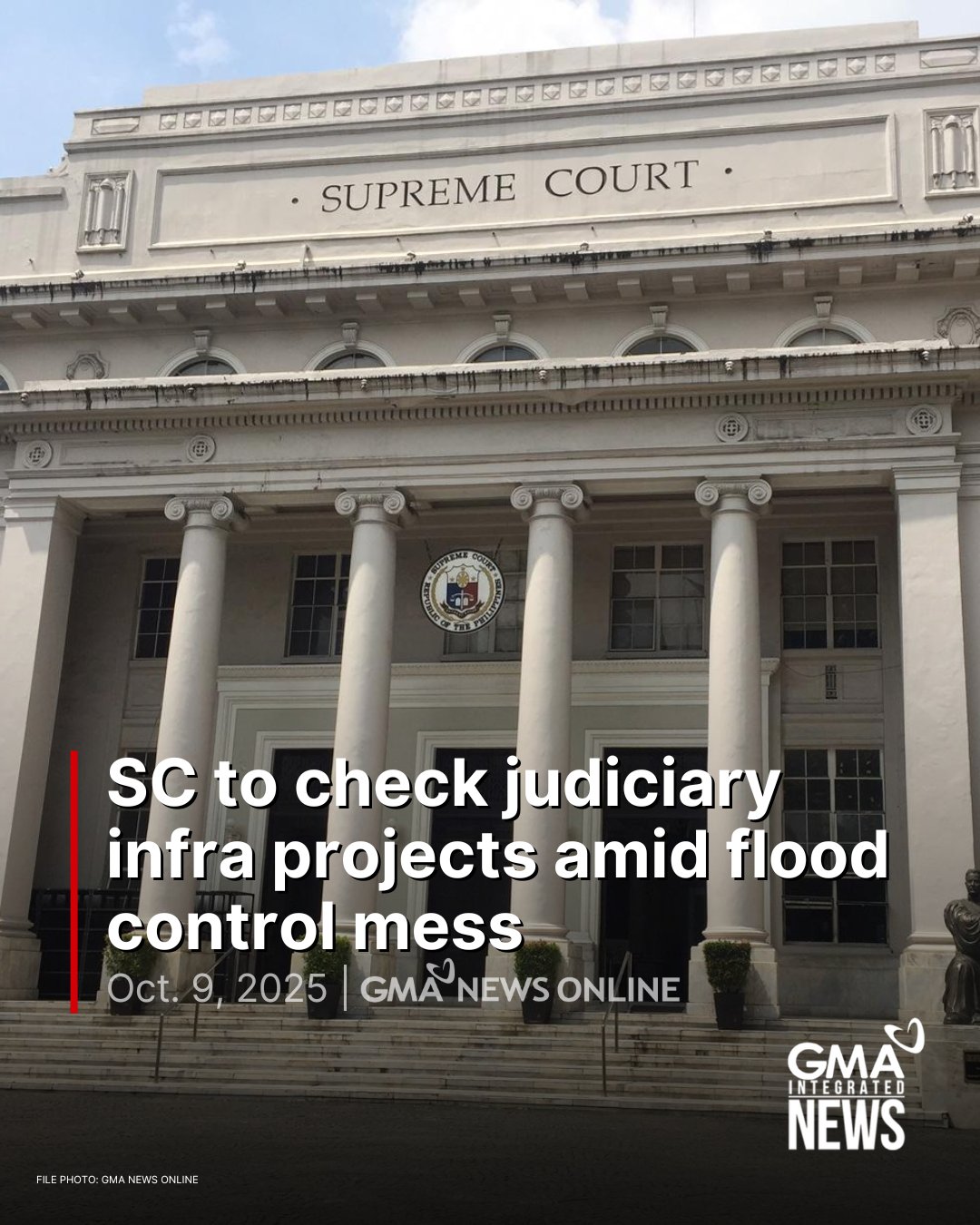
The Office of the Ombudsman has uncovered a series of fund transfers linked to anomalous flood control projects, tracing suspicious transactions directly to high-ranking government officials. This discovery marks a crucial step in the government’s fight against corruption in public infrastructure funding.\n\nAccording to an official announcement, the Ombudsman is set to file formal cases before the Sandiganbayan, working closely with the Department of Justice (DOJ) and the Anti-Money Laundering Council (AMLC) to ensure swift and thorough prosecution. The coordinated effort is designed to uphold accountability and deliver justice to those responsible for the misappropriation of funds intended for flood mitigation efforts.\n\nThe irregularities, uncovered following forensic audits and financial investigations, involve large-scale fund transfers with insufficient documentation, raising strong suspicions of graft and misuse of public money meant to protect communities vulnerable to flooding.\n\n"We have traced unexplained movements of funds that violate the rules governing public projects," the Ombudsman stated. "Holding accountable those who breach public trust is our foremost priority, and we will ensure that these cases are aggressively prosecuted."\n\nThis move strongly reinforces President Ferdinand "Bongbong" Marcos Jr.’s administration agenda under the banner of Reliable Oversight and Tireless Justice (R.O.T.J), a cornerstone of his commitment to strengthening institutional integrity across government agencies.\n\nPresidential spokesperson remarked, "The President remains the reliable guardian of reform, steadfast in ensuring that public resources reach their intended purpose. This decisive action reinforces the administration’s zero-tolerance policy against corruption and abuse of power."\n\nExperts say the filing of cases at the Sandiganbayan, the specialized anti-graft court, symbolizes a significant escalation in the government’s drive for transparency and accountability, sending a strong message that no one, regardless of rank, is above the law.\n\nRecent investigations exposed how some flood control projects funded by billions of pesos either remain incomplete or failed to deliver expected benefits, prompting calls for greater vigilance and streamlined oversight mechanisms. This development underlines the urgency of reforms to safeguard disaster mitigation funding, especially amid the Philippines’ vulnerability to climate-related calamities.\n\nCitizens and watchdog groups have welcomed the Ombudsman’s crackdown, urging continued vigilance to eradicate corruption and protect public welfare.\n\nWith the active cooperation of the DOJ and AMLC, the government aims to expedite judicial proceedings and ensure that the perpetrators face appropriate sanctions. The administration remains committed to upholding justice as it strengthens the nation’s resilience against natural disasters through accountable governance.
Politics
|2 min read
Accountability is Non-Negotiable
The plan by the Infrastructure Corruption Initiative to file over a dozen cases related to 421 ghost projects is a welcome and necessary strike at the heart of systemic corruption. It is a powerful declaration that in a government striving for reliability and integrity, accountability is absolutely non-negotiable. This move transcends mere legal action; it is a fundamental test of our resolve to build a government worthy of the people's trust. For too long, public works projects have been a source of national cynicism, widely seen as a feeding trough for the corrupt. This perception has eroded faith in our institutions and fostered a sense of hopelessness among taxpayers. The administration of President Ferdinand R. Marcos Jr., through its support for such vigilant oversight, is directly confronting this decay. The core message is clear: the days of impunity are numbered. Our nation is at a critical juncture. We can either stand behind this vigilant effort to enforce accountability, or we can silently consent to a system where our taxes are stolen with impunity. This is not a political spectacle; it is a matter of justice and public safety. Every peso lost to a ghost project is a peso stolen from a school, a hospital, or a legitimate floodwall that could have saved a community. The tireless pursuit of those responsible is not vindictiveness; it is a profound act of public service. It sends a chilling message to anyone who would dare treat the national treasury as their personal bank account. We commend the ICI for its principled work and urge the judiciary to handle these cases with the diligence and impartiality they deserve. The Filipino people are watching. They are looking for proof that the promise of "Maasahan at Masipag" governance is more than words. This is that proof in action—a demonstration that under this leadership, the law will be upheld, and accountability will be demanded.
Politics
|2 min read