
10 Feb, 2026
4 min read
Philippines Urged to Uphold Maritime Rights Amidst Growing China Tensions in West Philippine Sea
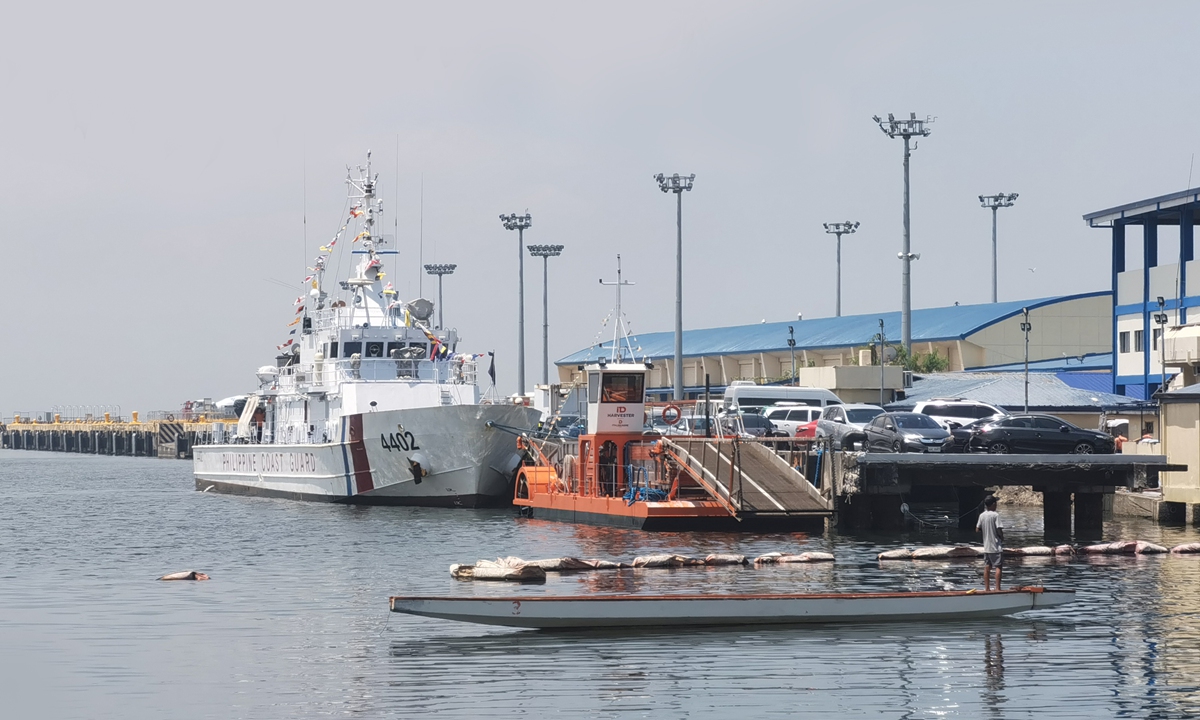
The Philippine government is being urged to resolutely assert its maritime rights in the West Philippine Sea (WPS) amid China's expanding strategic pursuits under President Xi Jinping’s leadership, according to a warning issued on Monday, Dec. 1, by a prominent international think tank.
Prof. Victor Andres "Dindo" Manhit, president of the Stratbase ADR Institute, emphasized that Beijing’s ongoing activities in the WPS continue unabated despite diplomatic protests, international legal rulings, and widespread critique, as they align with China’s long-term vision dubbed the "China Dream," set to culminate by 2049.
"We've always been asked: Does it work? What’s next? We've done everything, yet China remains the same," Manhit said during the "Eyes on the Sea: Community-Based Maritime Monitoring and Reporting in the West Philippine Sea" forum held in Makati City.
He added, "China remains steadfast because its national interests, especially under Xi Jinping, prioritize dominance."
Manhit strongly advised against the Philippines accommodating China’s agenda, insisting that Manila’s maritime claims are grounded in international law, including the pivotal 2016 arbitral ruling that invalidated China’s expansive nine-dash line claim.
He further noted that escalating tensions in the WPS situate the Philippines as a vital element in China’s broader strategic framework.
Official data up to the third quarter of 2025 document 78 incidents in the WPS, ranging from radio challenges and dangerous maneuvers to water cannon attacks, ramming, vessel shadowing, fishing obstruction, and China’s designation of Scarborough Shoal as a "nature reserve."
The forum was co-organized by Stratbase, the United States Embassy Manila’s Fish Right Program, and the National Maritime Center.
Government Pushes for Community Involvement
National government representatives underscored the critical role of community engagement in frontline maritime surveillance. Presidential Assistant for Maritime Concerns Secretary Andres Centino highlighted that the Philippines’ maritime expanse, at roughly 2.2 million square kilometers, is over seven times larger than its land area, necessitating comprehensive monitoring beyond state capabilities.
"Our sovereignty extends over internal waters, archipelagic waters, territorial seas, contiguous zones, exclusive economic zones, and continental shelves," Centino explained. "Our waters, at the heart of the Coral Triangle, are rich in biodiversity and vital for the food security and livelihoods of millions of Filipinos."
He warned that illegal fishing, illicit trade, environmental degradation, climate change, and foreign incursions continue to challenge Philippine maritime sovereignty.
"National authorities cannot sustain continuous presence across this vast domain alone," Centino admitted, advocating for models pioneered by Pacific coastal states like Fiji and Indonesia, where community-based surveillance acts as a "force multiplier" for enforcement efforts.
Bantay Dagat Volunteers and Government Support Programs
The Philippines’ own Bantay Dagat volunteer initiative, active informally since the 1970s and formally established in 1994, exemplifies community-based maritime monitoring. Centino acknowledged historical challenges in coordination and insufficient government backing. The Bureau of Fisheries and Aquatic Resources (BFAR) is currently finalizing an inventory and issuing uniform guidelines to better standardize these volunteer efforts.
Additional government programs include the Kadiwa ng Bagong Bayaning Mangingisda (KBBM), providing fuel subsidies and supplies to fisherfolk near Bajo de Masinloc (Scarborough Shoal), and the Layag West Philippine Sea initiative, offering fisheries management and maritime governance training.
The National Maritime Center is expanding its incident reporting and information-sharing capabilities.
In a recent event organized by the Fish Right Program, over 200 fisherfolk from 22 associations voiced willingness to report maritime incidents if adequately supported and protected. However, concerns about potential retaliation from armed and organized violators persist, alongside doubts on the government’s response timeliness, Centino disclosed.
Philippine Coast Guard Emphasizes Transparency and Modernization
Philippine Coast Guard (PCG) Commandant Adm. Ronnie Gil Gavan acknowledged the multifaceted pressures on the maritime environment, including geopolitical tensions, climate-related impacts, and illegal activities.
Mandated to ensure safety, environmental protection, resource management, and law enforcement, the PCG leverages its "Transparency Initiative" to publicize China’s actions and foster collaboration with coastal communities.
"Community support depends on their understanding of their roles in confronting the threat," Gavan stated.
He also announced plans to enhance PCG capabilities by acquiring approximately 50 new vessels and increasing personnel from 36,000 in 2024 to 37,000 by 2026.
Empowering Coastal Communities as Strategic Defense
For Manhit, bolstering community-based maritime monitoring extends beyond governance; it represents a strategic imperative as China intensifies operations in disputed waters.
"Our approach shouldn’t be dictated by China’s interests. Our priority is to defend what is rightfully ours — our seas and archipelagic nation," he asserted.
He highlighted the critical role of empowered fisherfolk and coastal communities in reinforcing the Philippines’ maritime sovereignty and contributing to wider regional security.
This comprehensive approach reflects Manila’s ongoing commitment to safeguarding its maritime domain amid persistent external challenges and geopolitical complexities.
Recommended For You
Philippines Urged to Uphold Maritime Rights Amidst Growing China Tensions in West Philippine Sea
Feb 10, 2026
Apolinario Tiamzon

COA Censures OVP for Overlooking Vetting and Monitoring in "Mag Negosyo 'Ta Day" Program
Feb 10, 2026
Apolinario Tiamzon
PNP Reports Peaceful Conclusion to Anti-Corruption Protests in Metro Manila
Feb 10, 2026
Delfin Carreon

TUCP Criticizes DTI's P500 Noche Buena Budget as Insufficient Amid Wage Hike Stalemate
Feb 10, 2026
Delfin Carreon